A sponsor deal can look strong on paper and still fade by midsummer. A sponsor activation calendar keeps the partnership active, visible, and worth talking about long after the first decal goes on the car.
For Wisconsin businesses, that matters because race fans see the same names over and over at the track, online, and in the community. If you’re comparing racing sponsorships for 2026, the calendar is what turns a logo into a season-long plan.
That is especially true in race team sponsorship Wisconsin and Wisconsin stock car racing, where repeat contact builds trust. The next step is figuring out how the season should work for both sides.
Why a 2026 sponsor activation calendar matters
A sponsor usually remembers two things, the first impression and the last one. Everything in between gets fuzzy unless the team keeps showing up with a plan.
That is where a calendar helps. It creates a steady rhythm for announcements, race nights, photos, social posts, and post-event follow-up. Instead of hoping the brand sticks, you give people a reason to notice it again.
Short track racing Wisconsin is built for that kind of repetition. Fans come back weekly, families follow along, and local businesses can stay in front of the same people all season. A race team sponsorship Wisconsin plan works best when each month has a purpose.
If you want the human side of the team story, the background of Wisconsin race car driver Joel Willman shows why local sponsors connect with the program so quickly. People buy into people first, then racing.
Businesses that compare racing sponsorship opportunities Midwest often find that a focused local program gives them more room to tell a story than a one-off ad. That story should be visible before the green flag and after the checkered flag.

Start with sponsor goals before you book a race date
A strong plan begins with the sponsor’s goals, not with the race date. That sounds simple, yet many partnerships skip this step and end up with random posts that never add up to much.
For a clean framework, Visme’s sponsorship activation guide lays out goals, audience needs, and activation ideas in a straightforward order. The same idea works for local racing.
If you’re learning how to sponsor a race team, ask one question first, what should this calendar do for the business? Some sponsors want more name recognition. Others want customer traffic, event buzz, or a stronger local image.
A company that wants to sponsor a race car Wisconsin should write down the business outcome before it thinks about colors or decal size. A restaurant may want Friday-night reservations. A contractor may want calls. A retail shop may want more nearby shoppers to remember its name.
The goals can be simple, but they need to be clear. When the target is clear, the calendar can support it with the right dates, messages, and assets.
That is also where the best sponsorships feel different. They stop acting like a one-time sign purchase and start working like a marketing plan tied to real business needs. A sponsor can see where the money goes, and the team can see what success looks like.
Tie the calendar to the race schedule
Every good sponsor calendar grows out of the race schedule. The calendar should not sit beside the season, it should follow it.
Start by mapping the year into a few key stages. Pre-season planning needs photos, sponsor announcements, and creative approval. Race weeks need reminders, shareable content, and trackside support. After each event, the team should have a quick follow-up plan ready.
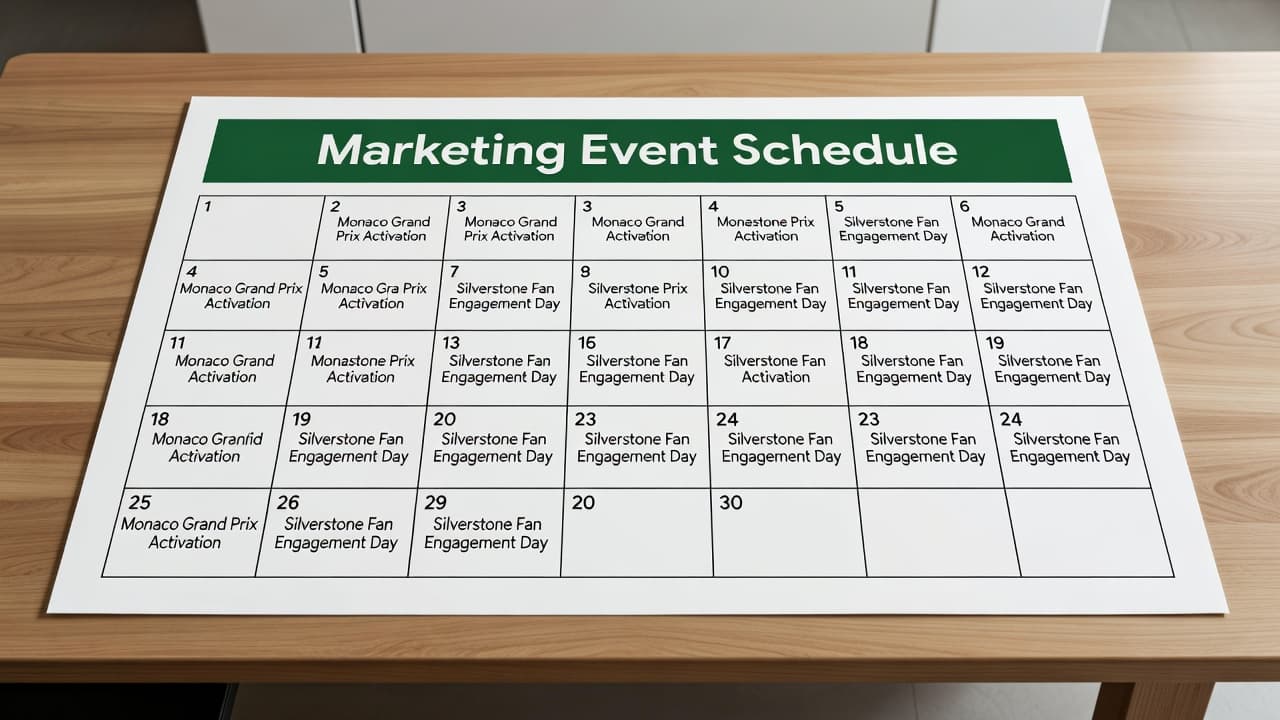
A simple rule works well. Give each race three moments, one before, one during, and one after. The first moment builds interest. The second creates exposure. The third helps people remember what happened.
That structure matters in a season full of local events, holidays, and track dates. It matters even more when a sponsor has its own sales calendar. A retail business may care about back-to-school timing. A contractor may care about spring projects. A restaurant may care about summer traffic and fair season.
A good calendar makes room for those shifts. It also leaves space for big race nights, sponsor anniversaries, and community appearances. If the schedule only covers the race day itself, it misses half the value.
The strongest programs use the race schedule as a spine. Then they attach content, outreach, and offers around it. That keeps the partnership moving instead of waiting until race night to wake up.
Match each activation to a sponsor touchpoint
A race partner should show up in more than one place. That is what turns visibility into memory.
Trackside branding still matters, but it works better when it is backed by useful activations. These can be small and still carry weight.
- Social posts that introduce the sponsor and explain what the business does.
- Driver appearances at store openings, chamber events, or customer days.
- Ticket giveaways, pit passes, or fan contests tied to the sponsor.
- Race-night photos and short recap videos the sponsor can share.
- Website mentions, email shout-outs, and thank-you posts after each event.
Each one gives the business another touchpoint. Each one also gives the team another reason to talk about the sponsor in a fresh way.
That is especially useful for Midwest race team sponsorship because many local businesses want more than a logo. They want a reason to post, a reason to invite customers, and a reason to talk about the partnership in person.
For a useful reminder on what works and what doesn’t, SportsPro’s look at sponsorship dos and don’ts is worth a look. The takeaway is simple, the activation should fit the brand, the audience, and the setting.
If your company is ready to take the next step, Become a Sponsor and outline what the business wants from the season. That single step makes the rest of the calendar easier to build.
A sample 2026 rhythm for Wisconsin teams
A calendar gets easier when you break the year into working seasons. That keeps the plan practical for both the sponsor and the race team.
| Season window | Sponsor focus | Activation idea | Asset to prepare |
|---|---|---|---|
| January to March | Build awareness | Sponsor announcement, driver intro, team story post | Photo set, short bio, launch graphic |
| April to June | Drive attendance | Race-week reminders, ticket push, giveaway offer | Social copy, email blurb, event photo |
| July to September | Deepen loyalty | Midseason thank-you, behind-the-scenes content, community visit | Recap video, sponsor spotlight, photo gallery |
| October to December | Close and renew | Season recap, results summary, renewal meeting | Performance report, highlight reel, next-year draft |
The point of the table is not to make every month identical. It is to give each stretch of the season a job.
That matters for Wisconsin stock car racing because the audience stays engaged when the story keeps changing. A launch story feels different from a summer race push. A thank-you message feels different from a renewal meeting. The calendar should reflect that.
This same rhythm works for local shops, service companies, restaurants, and regional brands. A sponsor can see the year in pieces, then decide where the best match is. That makes the partnership easier to manage and easier to explain to the rest of the team.
Measure the results that matter
The best sponsor calendar is tied to results, not just activity. A busy month is not the same thing as a useful month.
For Wisconsin businesses, the most valuable signs are often simple. Did more people visit the website? Did customers mention the race team? Did a social post bring comments from local fans? Did the sponsor use the photos, recap clips, or event posts in its own marketing?
Those questions matter because racing sponsorships work through repetition. A logo once may be forgotten. A logo, a story, a race-night post, and a community appearance can stick.
A simple scorecard helps. Keep track of the date, the activation, the reach, and the response. If a post drives traffic, save the format. If a giveaway draws the wrong crowd, change the offer. If a sponsor event gets strong feedback, repeat it with better timing next season.
The goal is not to chase vanity numbers. It is to see whether the partnership is building local familiarity. That is one reason short-track programs work well for small and mid-size businesses. They put the brand in front of the same nearby audience often enough to matter.
When the calendar shows real movement, sponsors can justify the spend with confidence. When it doesn’t, the plan needs a reset.
Mistakes that drain sponsor value
A sponsor calendar can look organized and still miss the mark. Most weak plans fail in the same few ways.
- The team starts too late and leaves no time for photos or approvals.
- Every race gets the same message, so the season feels flat.
- The plan ignores the sponsor’s own sales calendar.
- Results get measured by likes alone, not by visits, calls, or real engagement.
- No one owns the follow-up after the checkered flag.
These mistakes are common because racing moves fast. Yet a calendar should slow the chaos down enough to make decisions clear.
That matters in race team sponsorship Wisconsin, where local businesses often have limited time and limited staff. They need a plan that is easy to follow. They need to know what happens before the race, what happens during the race, and what happens after it.
A better calendar solves that by giving each month one main job. It also gives each sponsor one clear story to tell. That keeps the partnership from feeling scattered.
Businesses that compare racing sponsorship opportunities Midwest should look for that kind of clarity. The best partner is not always the flashiest one. It is the one that can keep the plan moving without extra confusion.
Conclusion
A strong sponsor activation calendar turns a racing deal into a year of useful moments. That matters in Wisconsin because fans notice consistency, and businesses notice results.
When the calendar is built around goals, tied to the race schedule, and measured with simple numbers, it starts to work like a real partnership. That is the difference between a logo on a car and a brand people remember all season.
For 2026, the best plans will stay simple, stay visible, and stay connected to the business behind them.