A race vendor booth has a short window to earn attention. Fans walk by fast, the track is loud, and every display is competing with engines, music, and movement.
That makes setup matter more than most businesses expect. A booth that looks sharp, feels easy to approach, and gives people a clear reason to stop can turn a race day into real business.
If you want your booth to work at a Midwest race, start with the plan, not the tent. The rest gets easier after that.
Start With the Goal, Not the Tent
Every successful booth begins with one question, what do you want people to do when they stop?
Some businesses want leads. Others want sales right on site. Many want brand awareness, a few good conversations, and a chance to introduce their name to a local crowd. At a race, you can do all of that, but only if you pick one main goal first.
That goal shapes the whole setup. A booth built for lead capture needs a clean sign-up area and a simple offer. A booth built for product sales needs clear pricing and fast payment options. A booth built around racing sponsorships should tell a stronger story, because sponsors want to see what kind of audience they will reach.
It also helps to know who you are talking to. Midwest race crowds include families, small business owners, longtime fans, and people who care about local roots. If your booth feels generic, they will keep walking.
A local team story can help with that. If you are looking at Wisconsin race car driver Joel Willman and the kind of audience he brings in, you start to see why trackside presence matters. People remember businesses that feel tied to the racing community, not just the ones that show up once.
If people cannot tell who you are and what you offer in a few seconds, they probably will not stop.
Build a Booth Fans Can Spot From the Midway
Visibility is everything at the track. Your booth should be easy to find from a distance and easy to understand up close.
Start with one strong banner or sign. Keep the message simple. Use a clean logo, bold colors, and large type that people can read while walking. If your display looks busy, it will disappear into the noise.
Height matters too. A table full of flyers is not enough. Add a vertical banner, a canopy valance, or a backdrop that rises above the crowd. That extra height gives your booth a shape people can spot while they are scanning the area.
The table itself should stay neat. One product display, one sign-up area, and one clear call to action work better than a cluttered spread. If every inch is covered, people do not know where to look first.
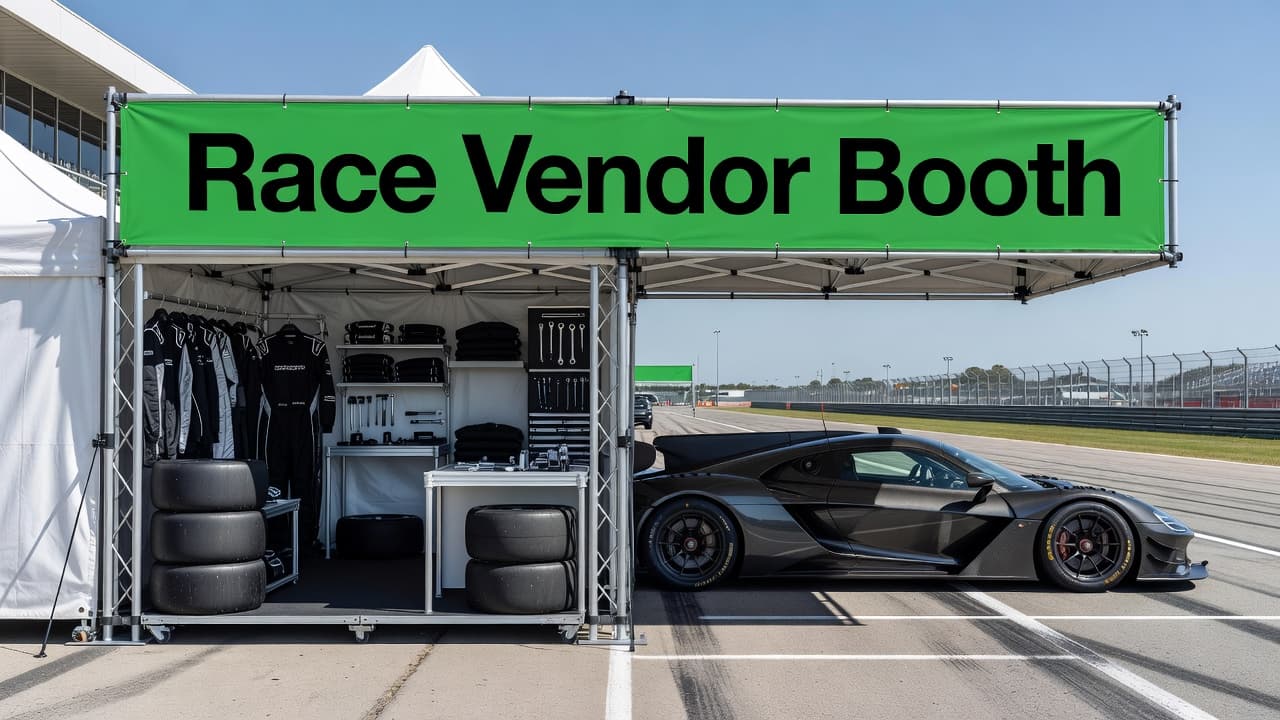
Photo by Julian V
Keep the front edge open so visitors can step in without feeling boxed out. That small detail matters more than many people think. A booth that feels easy to approach gets more time from passersby.
Lighting helps if your event runs late or the weather turns cloudy. Battery lights, clip-on lights, and bright table accents can keep your booth from fading after sunset. At a crowded race, that difference can be the edge you need.
Pack for Track Conditions, Not Office Conditions
Race day is harder on gear than a normal event. Wind moves tents. Dust gets into everything. Sun beats down on tables, paper, and people. Rain can show up with no warning.
That is why a booth kit should be built for the track, not a conference room. At short track racing Wisconsin events, the weather can shift fast, and your setup needs to hold up. The same is true at Wisconsin stock car racing weekends, where the crowd flow changes between heats, breaks, and feature races.
Bring the basics that keep the booth steady and workable:
- Weighted tent legs or sandbags
- Folding tables with extra clips or tape
- Extension cords, charging packs, and spare batteries
- Water, sunscreen, and hand wipes
- Price sheets, order forms, and pens that actually write
- A card reader and a QR code for easy mobile payment
Do not leave your sign-up sheet loose on the table. One gust of wind can ruin a whole stack of forms. Clip everything down or use a holder that keeps papers in place.
Think about comfort too. If your staff is hot, hunched over, or scrambling for supplies, the booth feels tense. A steady setup helps your team stay friendly and alert through the whole event.
It also helps to pack with the crowd flow in mind. People often drift between race cars, food vendors, and seating areas. Your booth should be ready when they pause, not after they have already moved on.
Turn Foot Traffic Into Real Conversations
A good booth does more than look nice. It gives people an easy reason to stop and talk.
Start with a simple opening line. Ask one friendly question about the event, the car they came to see, or the local teams they follow. Do not pitch too fast. People at the track want conversation first.
Once they stop, keep the message short. Explain what you do in one sentence. Then give them one clear next step, such as a sample, a flyer, a QR code, or a sign-up card. If you try to say everything at once, they will remember nothing.
This is where trackside presence starts to connect with business growth. A well-run booth can open the door to racing sponsorship opportunities Midwest companies often overlook. Some people come for merchandise and leave as future customers. Others come for the racing and leave with a new brand in mind.
If you are using the booth to explore sponsorship, keep your materials focused on value. Show how many people you reach, what kind of events you attend, and how your audience overlaps with local buyers. That works better than vague promises.
You should also have a follow-up plan before race day ends. Collect names, emails, or phone numbers in a clean way. Then send a short thank-you message while the event is still fresh. A quick follow-up turns a casual stop into a real lead.
Connect the Booth to the Team Behind the Car
A booth becomes stronger when it tells a real story. People do not just buy products at races. They buy into teams, people, and local pride.
That matters a lot for companies looking at race team sponsorship Wisconsin or a wider Midwest race team sponsorship program. The booth is often the first place they get a feel for the team behind the car. If the story is clear, the brand feels more trustworthy.
It also helps when the team has a face people can connect with. A local driver, a family name, and a track record in the community all make the booth feel more personal. When people know the people behind the effort, they pay closer attention.
For businesses wondering how to sponsor a race team, the booth can answer a lot of questions before anyone sits down for a meeting. It shows how the team presents itself, how it talks to fans, and how it treats the sponsor experience. That is a useful preview.
If your goal is to Become a Sponsor, your booth should make the next step feel easy. Put your contact details where people can see them. Keep your sponsorship sheet simple. Show exactly what kind of exposure and engagement you offer.
Some owners begin by saying they want to sponsor a race car Wisconsin, then realize they need a better sense of the full partnership first. That is normal. A strong booth helps them see the bigger picture and decide whether the fit makes sense.
The same goes for businesses looking at racing sponsorships for the first time. When the booth is clear, welcoming, and tied to a local racing story, the conversation feels natural. That is how a casual visit turns into a real business relationship.
Conclusion
A good booth at a Midwest race is simple, visible, and built for real people. It should hold up in bad weather, guide attention fast, and give visitors one easy next step.
The best setups do not try to say everything. They say the right thing, to the right people, at the right moment. That is what makes a race vendor booth worth the effort.
If your booth can start a conversation and support the team story behind it, it can do more than fill a space at the track. It can create business that lasts after the checkered flag drops.