What happens when two sponsors stop competing for attention and start sharing it? In racing, that move can turn a simple logo placement into a stronger campaign for both brands. Co-branded promotions work because they give fans one clear reason to care, and they give sponsors one clear way to measure results.
For businesses exploring racing sponsorships in Wisconsin, that matters. The best partnerships feel practical, local, and easy to explain. They also work across the track, social media, and the checkout counter.
Why Shared Promotions Work at the Track
Racing creates a rare kind of attention. Fans are focused, emotional, and ready to react to what they see on race day. That makes the track a strong place for a shared offer, especially when both sponsors bring something useful to the table.
The basic idea is simple, and co-branding partnerships often work because each brand brings a different audience. One sponsor may bring local reach. Another may bring a product, a prize, or a service that fans can use right away. When those pieces fit, the promotion feels natural instead of forced.
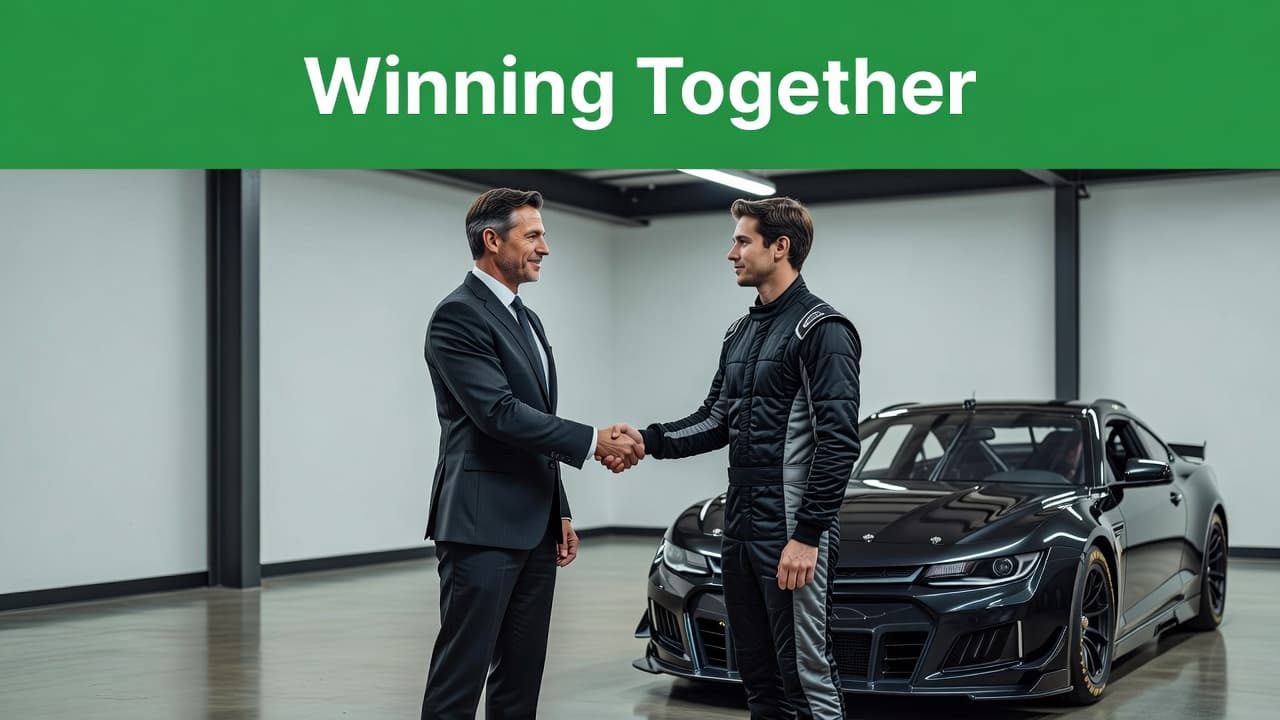
That matters more now than it did a few years ago. Racing sponsorships in 2026 are judged by more than a logo on a quarter panel. Sponsors want audience reach, social proof, and a sense that the partnership is doing something useful. A joint promotion gives them all three.
A strong example is a local service brand paired with a restaurant or retail partner. The race car gets attention. The offer gets shared. Both brands get introduced to people who already trust the team. That mix is hard to buy in a normal ad.
What Each Sponsor Brings to the Table
The best co-branded promotions do not ask both sponsors to do the same job. They divide the work in a smart way. One brand may handle the prize, while the other handles distribution, discounting, or content.
Here’s the simplest way to compare a single-sponsor pitch with a co-branded one.
| Area | Single Sponsor Offer | Co-Branded Promotion |
|---|---|---|
| Audience reach | One brand speaks alone | Two brands cross-promote |
| Fan value | Usually a logo or mention | A prize, offer, or experience |
| Content | Basic race coverage | Shared posts, photos, and tags |
| Sales angle | Brand visibility only | Visibility plus customer action |
The takeaway is clear. A co-branded promotion does more with the same race night. It gives the team a better story to tell, and it gives both sponsors a reason to promote the campaign after the checkered flag.
That shared story is why many marketers view these deals as more than sponsorship. Partnership marketing works best when both sides have a reason to keep talking about the same event. In racing, that usually means one brand helps create the offer, while the other helps move it.
How to Build a Promotion Fans Will Notice
A promotion has to be easy to understand in a few seconds. If fans need a long explanation, they’ll skip it. Keep the offer sharp and give it one clear action.
A simple way to build it is to start with the fan behavior you want.
- Pick one action.
Decide whether you want signups, store visits, coupon use, leads, or social shares. - Match the sponsors.
Choose brands that serve the same customer, or at least solve related problems. - Tie it to the race.
A giveaway, a ticket offer, a race-day coupon, or a post-race reward makes the connection feel real. - Set the proof points.
Decide before launch how you’ll track results, whether that’s clicks, redemptions, or leads.
This approach works well for short track racing Wisconsin fans already follow. They like direct offers. They also like seeing local companies involved in something they care about. A co-branded promotion turns that interest into action.
The most effective versions feel like a local event, not a sales pitch. For example, a tire shop and a family restaurant could back a race-night giveaway. The tire shop gets name recognition. The restaurant gets traffic. The team gets a promotion people talk about before and after the race.
Measuring Results Without Guesswork
Sponsors ask for proof because they have budgets to protect. That’s fair. A strong promotion should create numbers that are easy to explain and easy to repeat.
Trackside impressions still matter, but digital proof matters more now. Social posts, story views, link clicks, email signups, QR scans, and coupon redemptions all help tell the story. If the offer included a race-day appearance, that should be documented too.
A good sponsorship brings attention. A good promotion brings action.
That’s why the digital side of racing sponsorship opportunities Midwest keeps growing. The track is one piece. The photos, clips, and sponsor tags that follow the event are another. When both sponsors share those assets, the campaign keeps moving after the green flag.
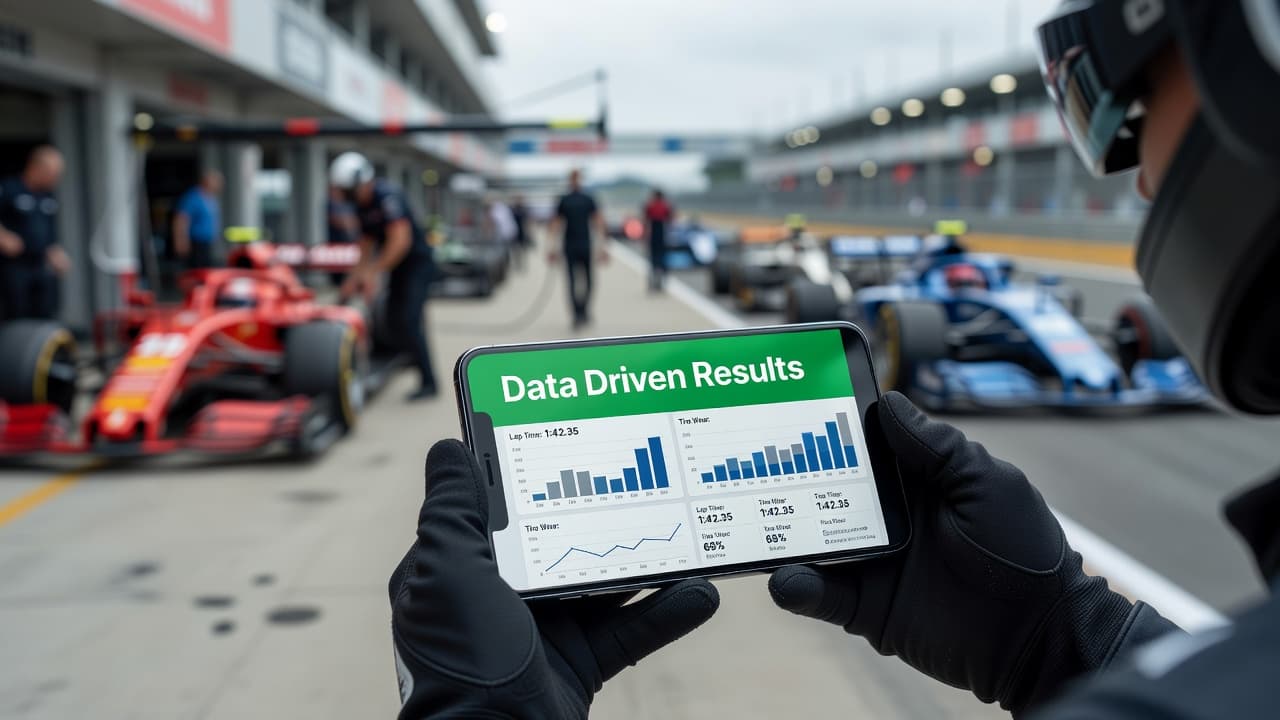
That is especially important for brands comparing different racing sponsorships. A team that can show simple numbers is easier to trust. Photos help. Reports help more. If the sponsor sees who engaged, what they clicked, and what happened next, the value is easier to defend inside their own company.
The smartest teams also keep the reporting simple. One page is often enough. Show the campaign goal, the reach, the highlights, and the next step. When a sponsor can understand the result in a minute, they’re far more likely to do it again.
Why Wisconsin Tracks Are a Natural Fit
Local racing has an advantage that bigger sports often lose. Fans know the teams. They know the tracks. They also know the sponsors that show up year after year.
That is why race team sponsorship Wisconsin campaigns can work so well around Wisconsin stock car racing and nearby Midwest events. The audience is local, but the reach often stretches across county lines and state borders. For a business looking for Midwest race team sponsorship, that wider footprint matters.
Brands that want to sponsor a race car Wisconsin should also think about what happens beyond the car itself. The decal is important. The shared promotion is where the relationship gets stronger. It creates a reason for both sponsors to post, talk, and invite people in.
If you are comparing racing sponsorship opportunities Midwest businesses can use, co-branded promotions give you a low-risk way to test the fit. You are not just buying exposure. You are joining a local story that fans can see and use.
For companies learning how to sponsor a race team, that is a better starting point than a plain logo deal. If you want a direct next step, Become a Sponsor and ask about a promotion built around your brand.
Mistakes That Shrink the Payoff
A good idea can still fall flat if the execution is sloppy. Most weak promotions fail for simple reasons.
- The brands do not fit the same audience.
- The offer is hard to explain in one sentence.
- Nobody owns the follow-up after the race.
- The campaign has logos, but no action for fans.
- The team posts once, then stops talking about it.
The easiest fix is to keep the promotion tight. One event. One message. One result to track. That structure gives both sponsors a clearer story and makes the campaign easier to repeat.
Many businesses also make the mistake of treating a sponsor relationship like a one-time ad buy. That misses the point. The best co-branded promotions build trust over time. Each event gives both brands another chance to show up together, and that consistency matters in local markets.
Conclusion
Two sponsors win together when the promotion gives fans something real to do. That is the heart of co-branded promotions in racing. It is not only about visibility. It is about shared value, clear action, and results that both brands can use.
For Wisconsin businesses, that approach fits the way fans already follow local racing. A smart offer, a clear role for each sponsor, and a simple way to measure success can turn one race into a stronger business relationship.
When the track, the team, and both sponsors pull in the same direction, the campaign keeps working long after race night ends.